%20(2).svg)
.svg)

.svg)

.svg)



B2B SaaS Billing Software Buyer’s Guide | Compare Vendors
Selecting an enterprise billing platform shapes how your entire revenue engine runs. Once your contracts, invoicing rules, and revenue schedules live inside a system, every limitation affects cash timing, audit readiness, model accuracy, and your team’s workload. As businesses scale into more complex pricing and multi-entity structures, finance leaders often compare Zuora and Subscript to determine which platform can support their go-to-market motion without adding operational friction.
This guide outlines how Subscript approaches billing, revenue recognition, and SaaS metrics in a unified way, and how that might differ from a legacy enterprise billing platform. The goal is to help B2B SaaS teams understand the practical differences in implementation, data structure, usability, and long-term maintainability so you can evaluate both vendors with clarity.

“It felt like Subscript was manageable. It would allow us to get a more automated billing process in place without overwhelming us with tons of other features that get in the way and confuse things.”
Michele Golden
Head of Finance at doctorly
Read case study
Key Differences Between Zuora and Subscript
TL;DR: Legacy enterprise subscription platforms like Zuora come with a price tag and resource-heavy onboarding that many early-stage and mid-market finance teams find challenging. Subscript is built specifically for growing B2B SaaS finance teams that want an agile partner, a single intuitive system for billing, rev rec, and analytics, and a unified data model that produces reliable metrics without spreadsheet cleanup.
1. An agile partner with attentive, white-glove service
Finance leaders frequently describe legacy vendor experiences marked by rotating account owners, long ticket queues, and slow turnaround times. Implementations can extend as teams navigate complex configuration, while changes to pricing or workflows often require engineering time or formal change requests. Over time, the dynamic can feel inverted: the business adapts to the software, not the other way around.
Subscript works differently. From the beginning, your team engages with people who have operated in SaaS finance and understand how billing choices impact revenue recognition, forecasting, and reporting. Implementation specialists interpret contract language, recommend scalable structures, and help you avoid design patterns that create downstream technical debt. Post go-live, support stays close and consistent rather than shifting between unfamiliar queues.
Because Subscript is smaller, more focused, and tightly aligned with B2B SaaS, customers also see faster iterations and thoughtful response to feature requests. When modern finance teams need flexibility, it’s available without navigating layers of internal approvals.
Instead of managing a rigid system at arm’s length, you gain a partner and a platform that move with your business.
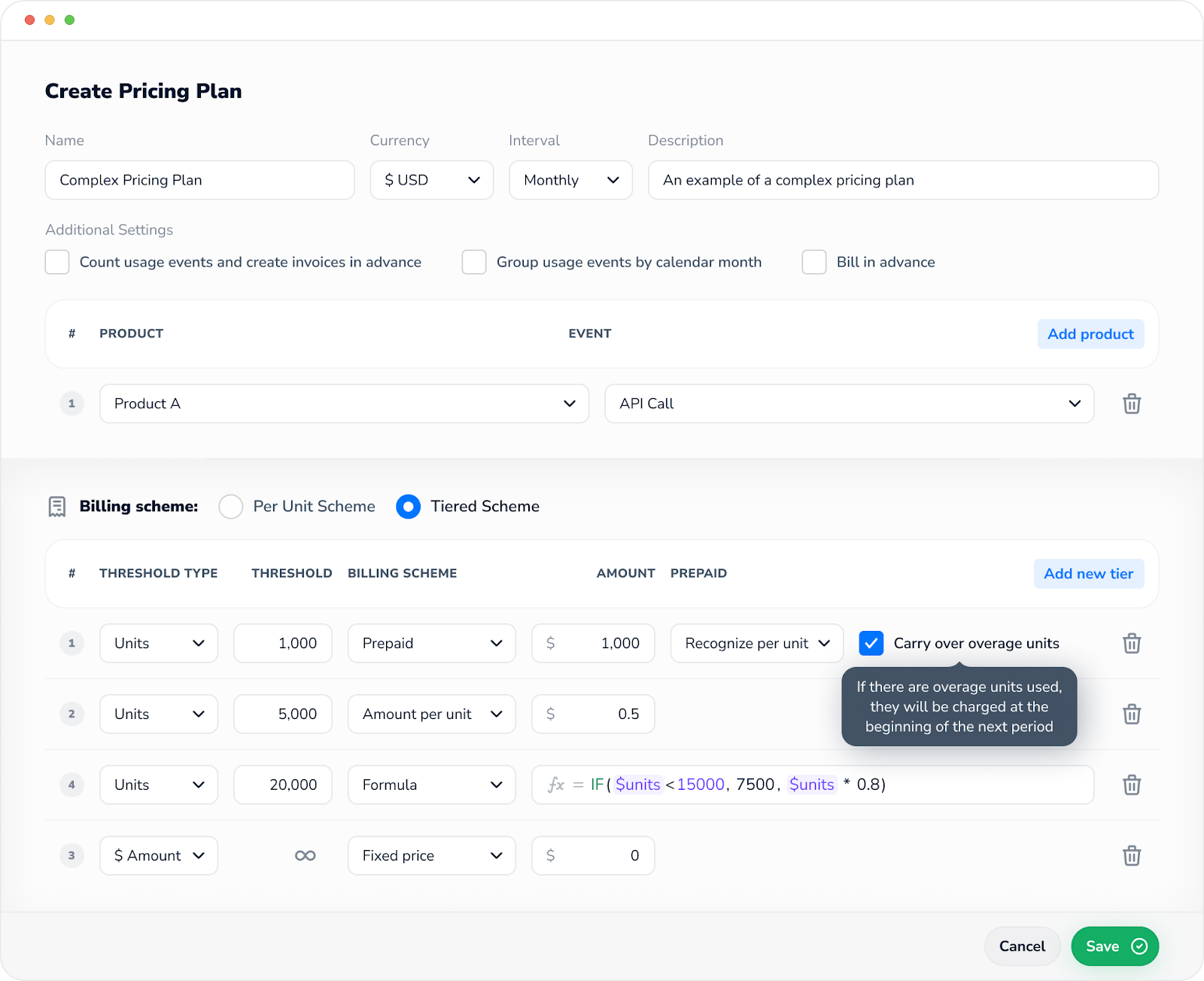
2. A single, intuitive system for billing, rev rec, and analytics
Enterprise systems often grow through modules, add-ons, and configuration layers. The result is a patchwork of interfaces and workflows that require substantial training. Even simple tasks can involve switching between separate billing, revenue, and reporting areas—each with its own concepts, objects, and constraints. Introducing a new product or processing an amendment can trigger multi-step updates across several components.
Subscript was built as one system from the start. Billing logic, revenue schedules, and analytics sit on the same foundation and behave consistently across customers and products. The interface is designed for finance teams working under time pressure: contract structures are clear, usage and subscription elements are easy to interpret, and workflows such as amendments, renewals, and true-ups follow the same logic everywhere.
Connecting the rest of your finance stack is also straightforward. Since CRM, ERP, and data warehouse integrations sit on top of this single source of truth, downstream systems see consistent, predictable information. With this structure, finance can adjust terms or launch new pricing without worrying about hidden configuration dependencies or cascading updates elsewhere in the system.
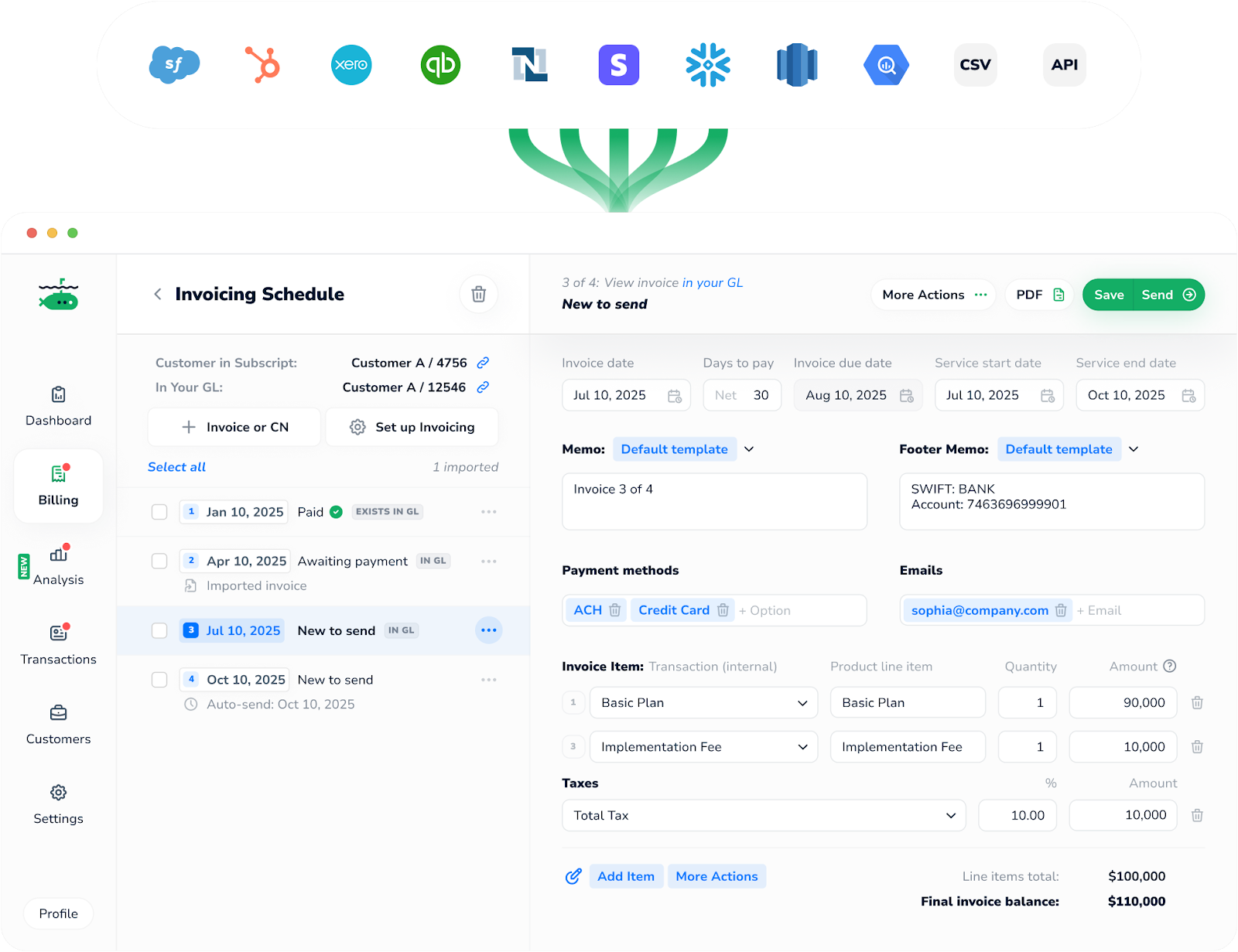
3. A unified data model that produces trustworthy metrics
One of the most common pain points with heavy, legacy platforms is data opacity. Teams can generate invoices, but clean ARR views, retention cohorts, and usage insights often require exports, spreadsheet cleanup, and reconciliation with other data sources.
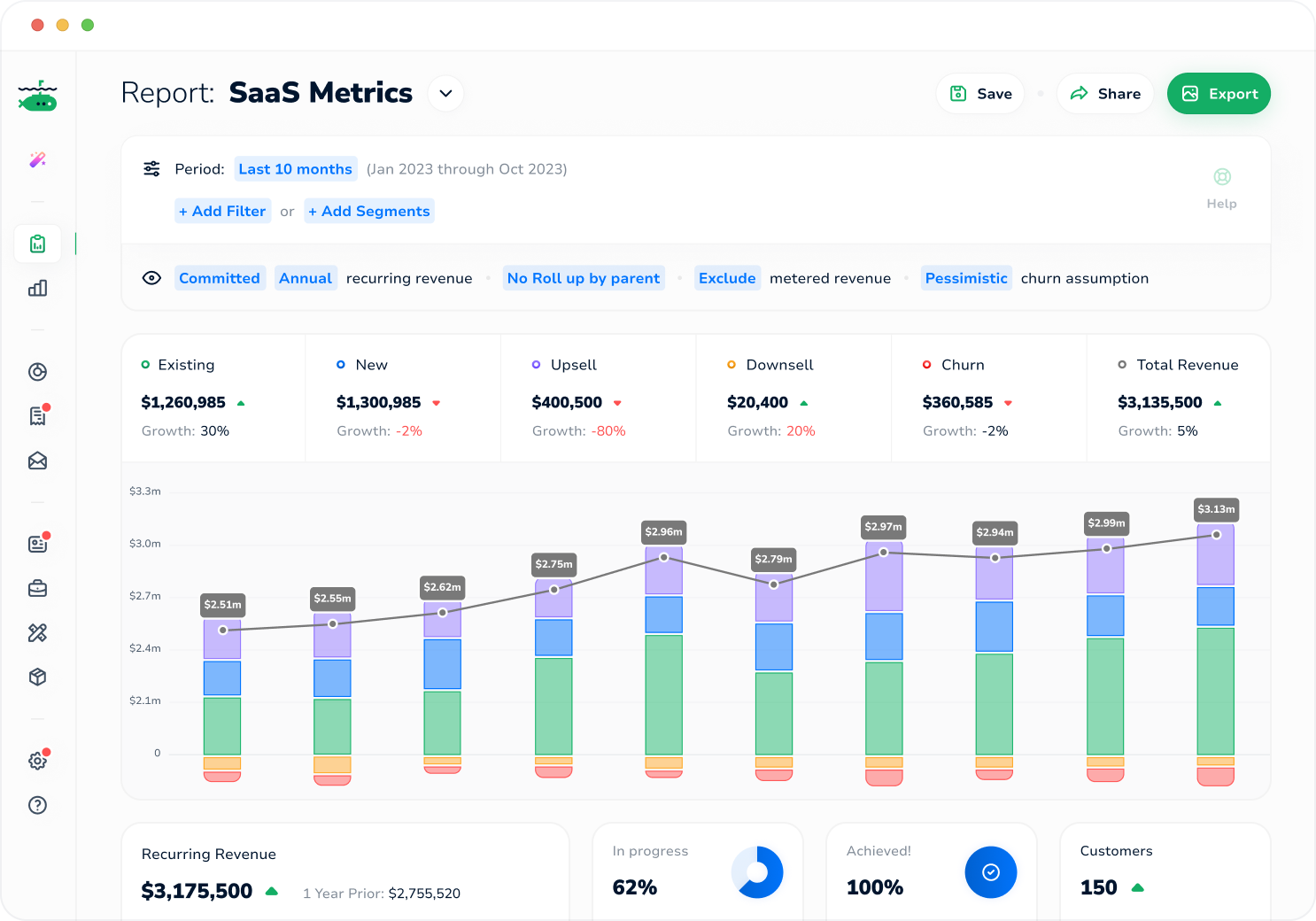
Subscript’s data model is unified by design. Billing, revenue recognition, and analytics all draw from the same representation of contract events, usage, and revenue timing. Amend a contract, record usage, or land an early renewal, and the impact appears instantly across ARR, NRR, waterfalls, cohorts, and dashboards.
Finance and revenue leaders answer questions directly in Subscript rather than piecing together insights from multiple exports. Metrics including ARR, CARR, NRR, GRR, LTV, CAC and 54 other SaaS KPIs are calculated from the same logic used for invoicing and revenue timing, so internal and external conversations stay grounded in one coherent view of the business.

“Every organization has their unique needs. But Subscript has been an amazing partner, showcasing their flexibility and ability to grow with us at a very fast pace. We see Subscript as a great business partner, not just a vendor. If you’re looking for a partner to grow with you, guide you, and work alongside you as you scale, I highly recommend Subscript.”
Jase Lau
Controller at EliseAI
Read case study
FAQs: Zuora vs. Subscript
How is Subscript different from a legacy platform like Zuora?
Subscript focuses solely on sales-led B2B SaaS. Billing, revenue recognition, and analytics live in a single environment with one architecture and one interface. Leaders who have worked with older systems regularly describe Subscript as easier to navigate, more intuitive to maintain, and better aligned with how SaaS contracts and usage behave. The emphasis is on clarity, performance, and support—not on a broad menu of loosely connected modules.
Can Subscript handle the same level of pricing complexity?
Yes. Subscript is designed for nuanced SaaS pricing: hybrid seat and usage models, tiered consumption, minimum commitments, overages, drawdowns, and multi-year arrangements with mid-term changes. The difference is in how manageable that complexity feels. Pricing structures are expressed in a way that is readable to finance and revenue operations teams, so updates do not always require development resources. When your go-to-market motion evolves, you can model new structures without rebuilding core parts of the system. Schedule a demo to see how Subscript can support the specific nuances of your business.
What should I expect from implementation with Subscript?
The implementation team works with you to map your contracts, define billing logic, align revenue schedules with ASC 606 or IFRS 15 requirements, and connect your CRM, ERP, and other essential systems. Historical data is ingested carefully so that invoices, deferred revenue, and cohorts reconcile to your existing records. The goal is to reach a clean, dependable cutover without stretching into a year-long effort that drains internal resources.
How does Subscript integrate with our existing CRM and ERP?
Subscript is built to work with your tech stack, integrating with systems like Salesforce, HubSpot, QuickBooks, and NetSuite, along with Snowflake, Stripe, and others. Because the integrations sit on top of a single data model, changes to pricing or contract structures do not require custom integration work every time you adjust your go-to-market strategy.
What does analytics look like inside Subscript compared to relying on exports?
In Subscript, analytics are not an afterthought. Dashboards and reports are built directly on the same engine that powers billing and revenue recognition. This means ARR composition, expansion and contraction, usage trends, cohorts, and renewal visibility are all available in one place without needing to rebuild reports in a BI tool. Finance teams can drill from high-level metrics down to individual customers and contracts, so variances and anomalies can be investigated quickly. For leadership, this translates into faster, more confident answers to recurring questions around growth quality and revenue durability.
How should I evaluate the ROI of moving to Subscript?
The return shows up in several ways: fewer hours spent on invoice preparation and adjustments, smoother revenue recognition, shorter close cycles, and more dependable metrics for board and investor conversations. Teams typically see a reduction in ad hoc reconciliations and a decline in the number of spreadsheets required to “fix” what their billing system produces.
Over time, the ability to support new pricing models and go-to-market experiments without a major reimplementation becomes another source of value, because the system does not become a constraint on how you charge customers. For example, EliseAI cut billing prep time by 10+ days, handling anywhere from 4,000 invoices per month to peaks of 15,000.
What support should I expect from Subscript after go-live?
Subscript customers work with a team that understands SaaS finance and stays engaged beyond the initial implementation. When you encounter new contract structures or enter additional markets, you can expect direct, informed conversations rather than generic ticket responses. This ongoing partnership is one of the primary reasons finance leaders cite when they recommend Subscript to peers who feel stuck with legacy platforms.
How does Subscript approach pricing compared to large enterprise vendors?
Subscript uses straightforward, all-in pricing. There is no revenue share model and no separate charges to unlock revenue recognition or analytics. The goal is to give you full clarity on what you’re buying, without add-on modules, gated features, or fees that surface only after implementation.
Compare Subscription Billing Platforms
Access high-level overviews of other billing vendors most often shortlisted with Subscript, including Maxio, Chargebee, and Tabs—shaped by feedback from operators who have evaluated or managed these tools in production.
For broader decision-making support, read through our B2B SaaS Billing Software Buyer’s Guide.
See Subscript in Action
Subscript is built for B2B SaaS teams that want billing, revenue recognition, and analytics to operate as a single, coherent system rather than a collection of moving parts.
If you are evaluating Zuora or rethinking an existing implementation, a personalized walkthrough can help you see how Subscript would model your contracts, connect to your stack, and produce the metrics your leadership expects.


