%20(2).svg)
.svg)

.svg)

.svg)



B2B SaaS Billing Software Buyer’s Guide | Compare Vendors
Choosing between Maxio and Subscript? Start with your billing complexity.
Finance leaders evaluating billing platforms usually reach this moment because something in the current setup is creating friction: a more complex business model, reporting delays, month-end cleanup, or the operational strain that comes with scale.
Whether you’re replacing a manual process or evaluating alternatives to Maxio, this guide will help you find a system that supports evolving pricing, keeps revenue schedules accurate, and provides dependable visibility as the business grows.

“We’ve been through this a couple of times now. This whole space makes a lot of promises about their ability to transform the order-to-cash-to-rev process. The reality is much different because of the complexity that flows downstream from the deal-making process.”
Thanh Dinh
CFO at Graylog
Switched to Subscript from Maxio
Read case study
Key Differences Between Maxio and Subscript
TL;DR: If you’re comparing multiple billing platforms, focus on how each tool handles complex contract terms, pricing changes, amendments, and reporting. Subscript is often chosen as a Maxio alternative when teams have sophisticated pricing models and they want billing, revenue recognition, and analytics that operate inside one consistent system.
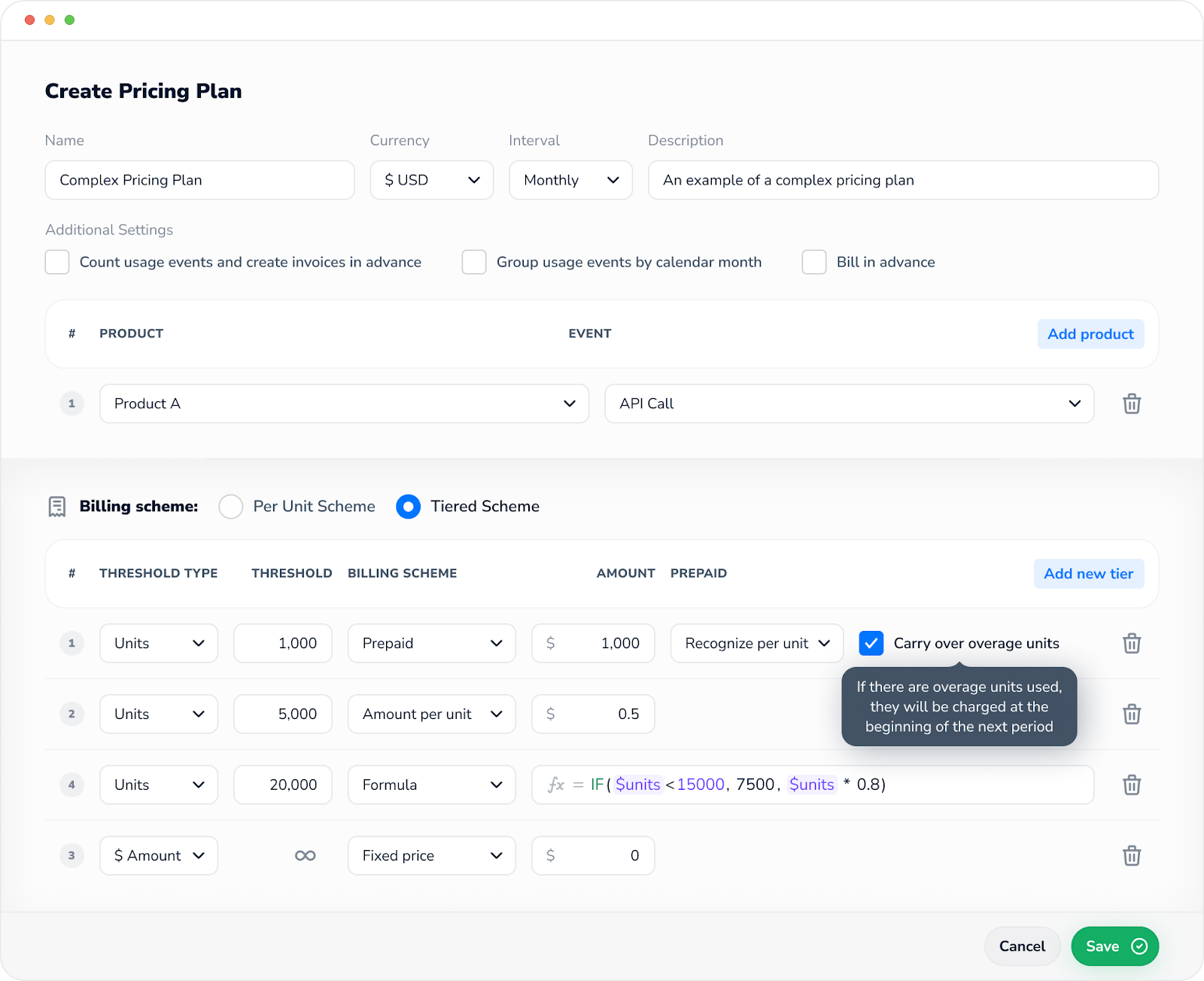
1. Billing and rev rec built for evolving SaaS pricing
As companies introduce usage components, hybrid pricing, custom terms, and mid-contract amendments, some legacy billing systems start to feel the pressure. Subscript’s structure keeps these transitions manageable. Pricing updates remain clean, contract edits follow consistent logic, and multi-entity or multi-currency arrangements don’t require special handling or workarounds.
With Subscript, contract changes, renewals, upsells, downgrades, and add-ons can be implemented reliably, while preserving accuracy. The platform supports a wide range of usage frameworks, including metered consumption, minimum commitments, and prepaid drawdowns, so billing stays aligned with the nuances of your GTM motion.
2. One platform, not multiple modules or add-ons
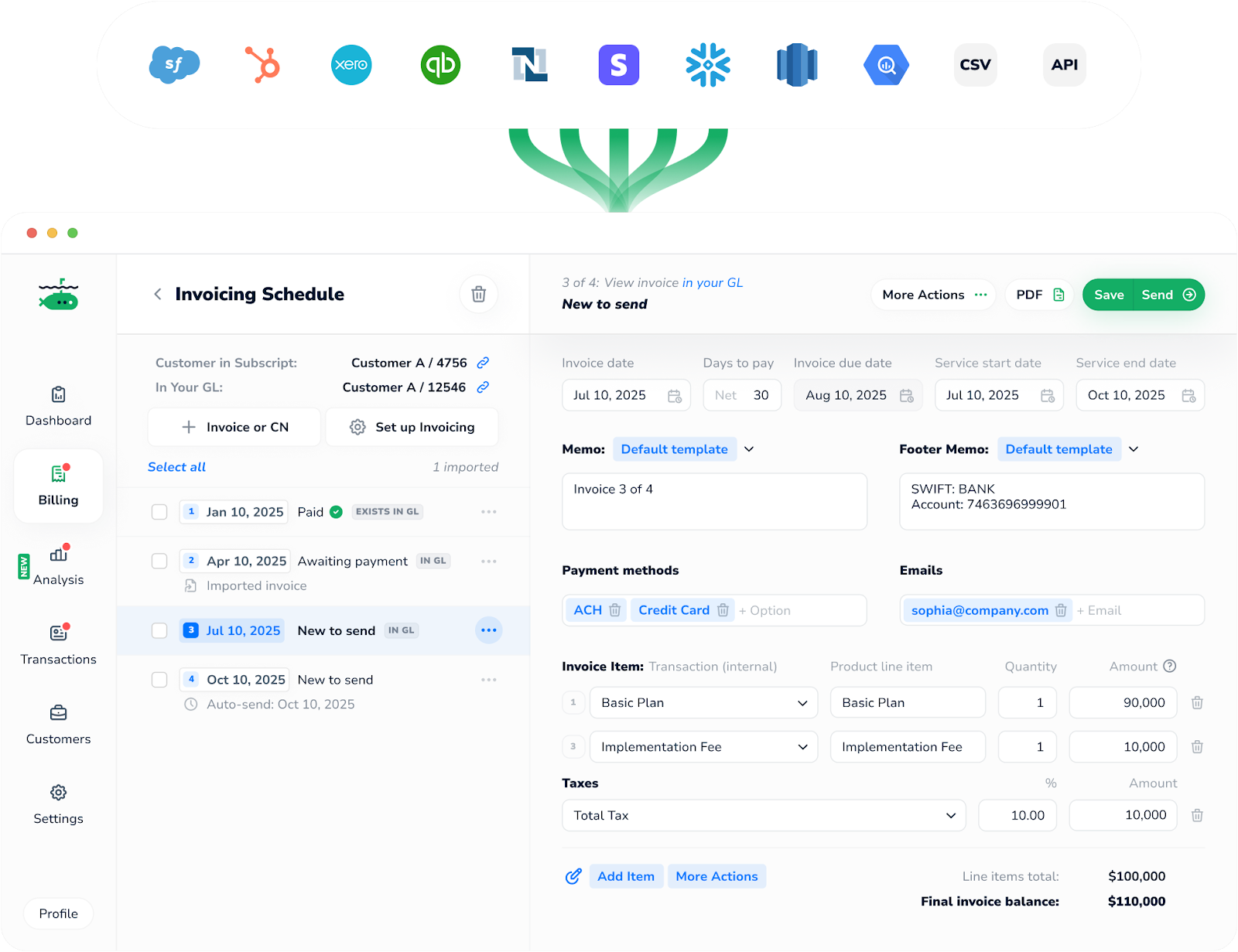
Different systems take different approaches to scale. Some rely on multiple modules or add-ons, each with its own workflows and data layers. Subscript was built as one system from the beginning, so billing, revenue, and analytics all share the same structure. This simplifies onboarding, reporting, and long-term maintenance.
Because Subscript wasn’t built from acquired tools, there are no mismatched interfaces or competing data models to maintain. Everything runs through a single engine, which eliminates cross-platform reconciliation and keeps performance responsive even as usage volume grows.
Subscript also provides well-documented integrations for reliable connections to your CRM, ERP, and data warehouse.
3. Analytics tied directly to the source of truth
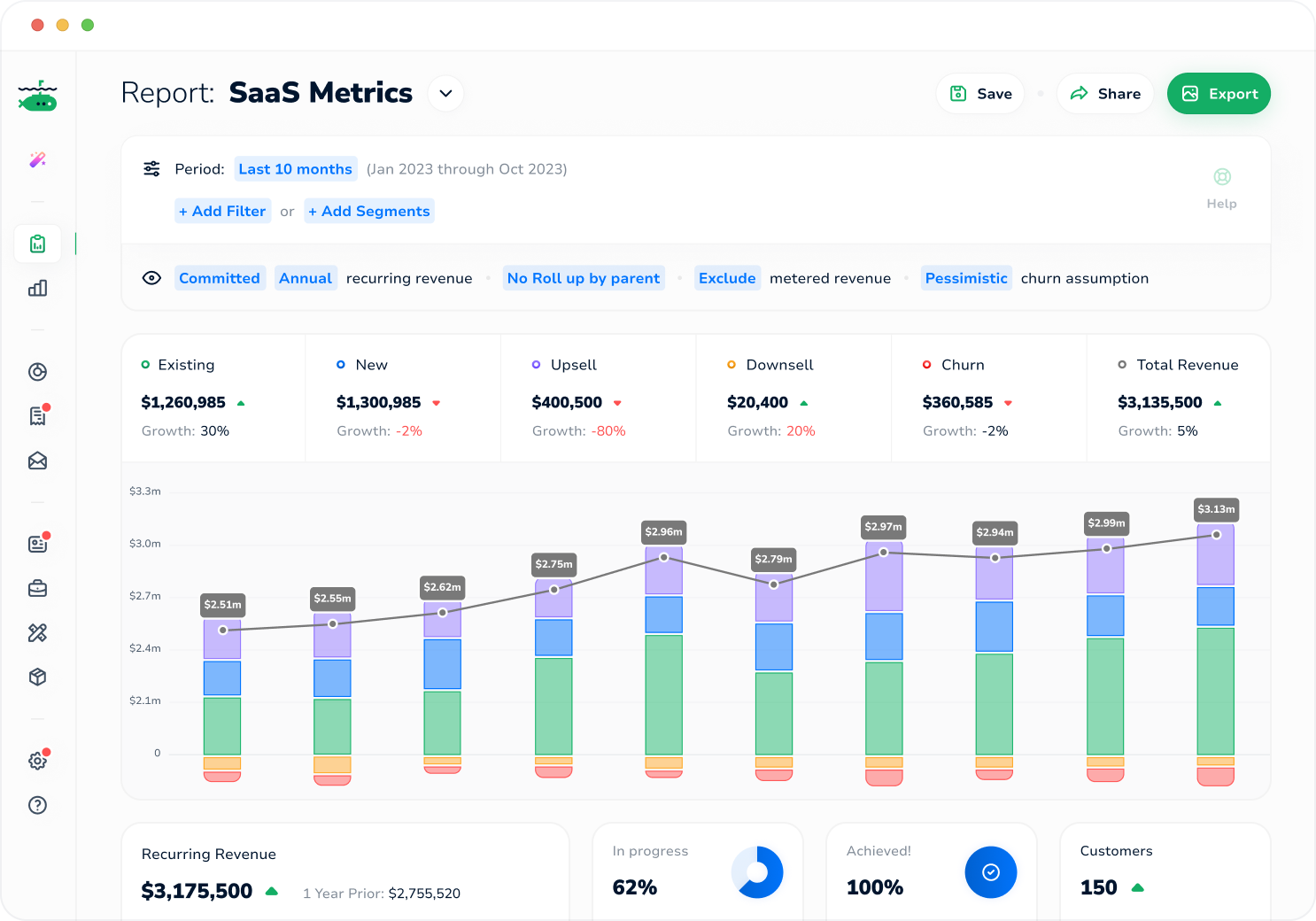
Finance leaders want real-time MRR/ARR, retention trends, cohorts, forecast inputs, and renewal visibility—without having to export data into spreadsheets or BI tools. Subscript was built analytics-first, so reporting sits on top of the same engine that powers billing and revenue recognition. This structure keeps metrics aligned and makes reporting faster and more dependable.
With Subscript, you’ll get ARR, CARR, LTV, CAC, NRR, GRR, and 54 other SaaS metrics—ready out of the box—along with real-time updates that reflect usage changes and contract edits as they happen. Filtering and slicing can be done directly in the platform across segments, cohorts, and date ranges, so teams can answer questions without relying on external tools.
Why Some Teams Switch from Maxio to Subscript
When companies move from Maxio to Subscript, the decision is usually tied to a shift in scale or complexity. In conversations with finance leaders, a few themes appear consistently:
Pricing evolved faster than the billing system
Billing processes that once felt manageable begin to strain under new demands. With Subscript, adding usage, shifting contract terms, or supporting multi-year agreements doesn’t require rethinking the underlying structure, even as the dataset grows or new product lines are introduced.
Month-end drifted into too much manual work
As invoice volumes increase, even small contract edits or exceptions can create disproportionate cleanup. Teams switch to Subscript when they want their billing and revenue data to align naturally, without multi-day reconciliation cycles. Because billing, revenue recognition, and analytics live in one unified system, the close is smoother and faster.
Reporting needs outgrew basic dashboards
Growing companies need deeper visibility and more nuanced insights: cohorts, segmented retention data, and forecast inputs they can trust. Subscript becomes a natural fit when teams want those answers quickly and easily, without building custom BI layers or maintaining spreadsheets outside the system.
Leaders want an adaptable, long-term foundation
Most finance teams want a platform that can scale without requiring a full rebuild in two years. Flexibility becomes a priority: the ability to support new pricing, new entities, new products, and new GTM motions. Subscript’s appeal comes from having billing, revenue, and analytics in one environment—reducing complexity and providing a system that stays fast, intuitive, and stable even in high-volume, high-growth environments.

“Our billing is very complex, requiring integration with both our ERP and our CRM. The Subscript team was capable and willing to provide the custom work we needed. That collaboration and feedback was ultimately the reason we chose Subscript.”
Jase Lau
Controller at EliseAI
Read case study
FAQs: Maxio vs. Subscript
How is Subscript different from legacy billing platforms like Maxio?
Subscript is newer than Maxio and some other tools in the market, which means it isn’t carrying years of technical debt or competing architectures. It was built as a single system from day one—with billing, revenue, and analytics on the same foundation—so workflows remain consistent and data stays aligned, even as complexity increases.
How do I know if Subscript can support our pricing model?
If you expect your pricing to evolve (e.g. usage, hybrid models, custom terms, or mid-contract amendments,) Subscript’s structure is built to support that kind of flexibility. Workflows stay consistent even as your business becomes more sophisticated. When evaluating Subscript, Maxio, or any other platform, insist on a live walkthrough of the scenarios that matter most to your team. In your personalized demo with Subscript, you’ll meet directly with an implementation specialist who will review the nuances of your pricing model and show exactly how the platform handles each step in real time.
What if we’re expanding into more entities or currencies?
Subscript natively supports multi-entity and multi-currency environments within one system. Revenue recognition and reporting stay aligned across entities, which simplifies consolidation and reduces manual adjustments.
How should I evaluate the effort of switching?
Start by mapping the parts of your current billing process that create the most manual cleanup. Any vendor you evaluate should be able to show precisely how they’ll eliminate those points of friction. Subscript’s goal is to align your invoicing, revenue schedules, and analytics upfront so that the workflows are predictable and stable. The implementation process is guided by a team experienced in complex SaaS billing setups, which helps prevent surprises during go-live.
What should finance leaders look for in analytics?
Look for a system that gives you complete visibility without requiring exports. With Subscript, you can drill into cohorts, slice performance by segment, analyze renewal patterns, and inspect individual customers directly in the platform. Since the reporting sits directly on top of your billing and revenue data, every metric stays consistent.
What ROI should we expect from a tool like Subscript?
Teams typically see improvements in time spent on invoice prep or billing changes, accuracy and audit-readiness of revenue schedules, and the speed of reconciliations and month-end reporting. If these are recurring pain points, Subscript tends to create meaningful operational time savings. For example: Scanifly cut 3-4 days of work per month.
What kind of support should we expect from a billing vendor?
Subscript customers highlight the value of working directly with people who understand their business model and SaaS finance. When evaluating any billing platform, confirm that you’ll have a dedicated point of contact during implementation and after go-live. Ask for references and understand how support handles urgent issues and feature requests. Some platforms meter support hours or require add-on packages; clarity up front helps avoid surprises later.
How does Subscript’s pricing compare?
Subscript uses transparent, all-in pricing. There is no revenue share, no add-on modules, and no hidden fees. You get the full platform—billing, revenue recognition, and analytics—at a single price aligned with your business today. As you grow, Subscript grows with you without adding an unfair tax on your revenue.
Compare Subscription Billing Platforms
Get a clear, unbiased look at other billing platforms most commonly compared with Subscript, including Chargebee, Zuora, and Tabs—grounded in firsthand insight from Finance teams that have evaluated or operated on them.
Explore the full B2B SaaS Billing Software Buyer’s Guide for additional guidance as you evaluate vendors.

“Subscript was the only software where all those mechanisms of monetization were just native in the platform. It was fit for purpose.”
Mike Jannetty
VP of Finance at Scanifly
Read case study
See Subscript in Action
Book a free, personalized demo to see how Subscript can handle your billing model, your revenue rules, and your reporting.


